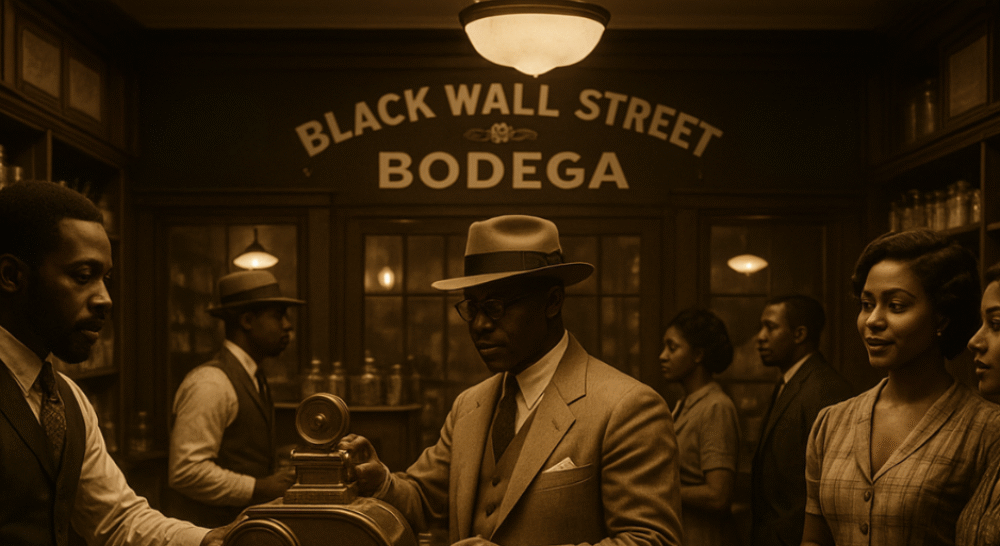
This story isn’t just history, it’s living memory. Greenwood, once known as “Black Wall Street,” was a vibrant Black entrepreneurial haven in early 20th‑century Tulsa. Originally built under segregation, it flourished with banks, newspapers, boutique shops – even its own hospitals and theaters – yet remained a self-contained oasis of Black excellence.
What most people don’t know is how deeply Greenwood was connected, not just economically, but culturally and emotionally.
- Dr. A.C. Jackson, described by Mayo Clinic founders as “the most able Negro surgeon in America,” lived and worked here before his life was tragically ended in the 1921 massacre.
- Ottaway W. Gurley, a former teacher, laid the structural and economic foundations of Greenwood—owning a hotel, properties, and even working as a sheriff’s deputy, a testament to Black leadership in those early years.
- Arriving in Tulsa in 1913 with just $1.50, Mabel B. Little opened the beloved Little Rose Beauty Salon by 1917, a sanctuary of style, dignity, and self-care for Black women on their one day off each week. After losing her home and business in 1921, she rebuilt her salon, adopted eleven children, worked in aircraft assembly during WWII, and later led civil rights protests to preserve Greenwood schools.
- A typing teacher and journalist, Mary E. Jones Parrish witnessed the massacre unfold from her apartment window. Refusing to leave, she nervously observed machine guns raining bullets across Greenwood and later documented it all in Events of the Tulsa Disaster (1923), the first comprehensive survivor account.
- A lifelong educator raised in Greenwood, Chloe L. Brown became Tulsa Public Schools’ first African-American reading specialist. Beyond the classroom, she founded The Chloe House, a transitional home empowering formerly incarcerated women with training, housing, and community support.
Living Legacy Today
When you walk through Greenwood – or step inside our bodega – you’re stepping into a legacy of grace in the face of upheaval, truth in the face of denial, and care in the face of crisis. These women remind us that legacies aren’t only built by business or buildings, but by heart, by witness, and by hands that help rebuild.
Let their stories guide us. May this space, our bodega, our community hub, our gathering place, be a reflection of their strength, their purpose, and their belief in tomorrow.